DLC Coating Machine: What It Deposits and How to Specify One
Diamond-like carbon is not a coating you order by the kilogram. It is a deposition process you commission, and the chamber is only one variable in that equation.
A tooling shop running 40,000 hardened punches a month sees the same pattern every quarter: cutting edges polish out, burrs grow, and the press operator starts shimming. When someone finally lays the maintenance log next to the tooling invoice, the conclusion is rarely that the tool steel was wrong. The surface was. A DLC coating machine exists to fix that surface with a carbon film a few micrometres thick, and specifying one is less about chamber size than about which deposition route your parts, your tolerances and your production rhythm can actually survive.
What a DLC Coating Machine Puts on the Part
DLC stands for diamond-like carbon, but the name oversells the simplicity. What the chamber deposits is an amorphous carbon film whose behaviour comes from the ratio of sp2 bonds, which are graphite-like, and sp3 bonds, which are diamond-like, plus whatever hydrogen or metal is deliberately alloyed in. That ratio is a process variable, not a catalogue item. Two machines both running "DLC" can produce films that behave nothing alike in a sliding contact.
Hydrogenated DLC, usually written a-C:H, is deposited from a hydrocarbon gas and typically lands between 15 and 30 GPa. Hydrogen-free tetrahedral carbon, ta-C, comes off a graphite cathode and runs higher, commonly 40 GPa and above. For comparison, hard chrome sits near 8 to 10 GPa, and the dry sliding friction coefficient of DLC falls between roughly 0.05 and 0.2 against about 0.5 for chrome. Those two numbers are why a coated punch outlasts an uncoated one by a margin the customer notices on the maintenance calendar.
Thickness is where optimism gets expensive. Below about 0.5 micrometres, wear life collapses. Above roughly 5 micrometres, internal compressive stress starts to win and the film delaminates in flakes that look like a manufacturing defect but are actually a process decision made months earlier. Production DLC normally lands between 1 and 4 micrometres, which is why thickness uniformity across the batch deserves more of your attention than the peak hardness figure printed in a brochure.
The Deposition Routes, and What Each One Costs You
Most DLC coating machines on the market follow one of four routes. The differences show up in achievable hardness, substrate temperature and how forgiving the process is when a part has a difficult geometry or a tight dimensional tolerance.
Typical DLC deposition routes and the production situations each one suits best.
Route
Carbon source
Substrate temperature
Hardness range
Where it earns its keep
PECVD (a-C:H)
Hydrocarbon gas
150 to 250 C
15 to 30 GPa
Tools, moulds, heat-sensitive steel
Sputtering from graphite
Solid graphite target
150 to 300 C
10 to 25 GPa
Precision parts, low-stress films
Cathodic arc (ta-C)
Graphite cathode
100 to 200 C
40 to 80 GPa
Cutting tools, high-wear contacts
Hybrid arc plus sputtering
Graphite plus metal targets
150 to 250 C
15 to 40 GPa
Doped DLC for automotive and sliding parts
Route choice is usually driven by two constraints: the maximum temperature your substrate can tolerate, and whether you need a smoother film or a harder one. A hardened bearing race at 60 HRC and a thin aluminium bracket do not share the same thermal budget. The same film chemistry can be adapted across steel, carbide and aluminium substrates by adjusting bias voltage and adding a metallic interlayer, which is why interface design gets discussed as carefully as the carbon layer itself.
The Numbers That Decide Whether the Machine Pays Back
A specification sheet is a negotiation document. These are the values worth pinning down in writing, because each one maps to money on the shop floor.
Adhesion class: Rockwell indentation results of HF1 or HF2 are production-grade. HF3 and HF4 mean the interlayer or the cleaning stage is not doing its job.
Thickness uniformity: plus or minus 5 percent across the usable rack zone is good, 10 percent is acceptable. Anything looser shows up as premature wear on the outer parts of a batch.
Cycle time: pump-down, ion etch, deposition and cooling combined. A 90-minute cycle at 400 parts beats a 40-minute cycle at 120 parts every time.
Load capacity: measured in usable coated area, not chamber volume. A big chamber with weak fixtures holds less than a compact one.
Substrate temperature ceiling: what the machine does at the top of your allowed range, not in the middle of it.
Source and target life: how many batches before a cathode or target change, and how long that change stops production.
Batch-to-batch repeatability: the same part coated six weeks apart should land within a few GPa and a few tenths of a micrometre.
A coating that passes a hardness test but fails a scratch test is not a hard coating. It is a delayed warranty claim on a part that already shipped.
Hardness is the easiest figure to quote and the least informative on its own. A 45 GPa film that spalls after 2,000 strokes is worse than a 20 GPa film that holds for 200,000. Acceptance testing should therefore combine hardness with a scratch test, a Rockwell adhesion check and a real wear trial on the actual part geometry.
What Changes on the Shop Floor
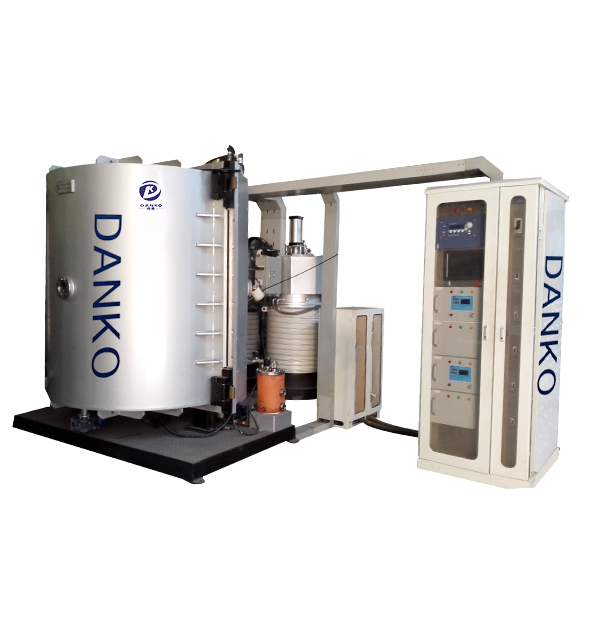
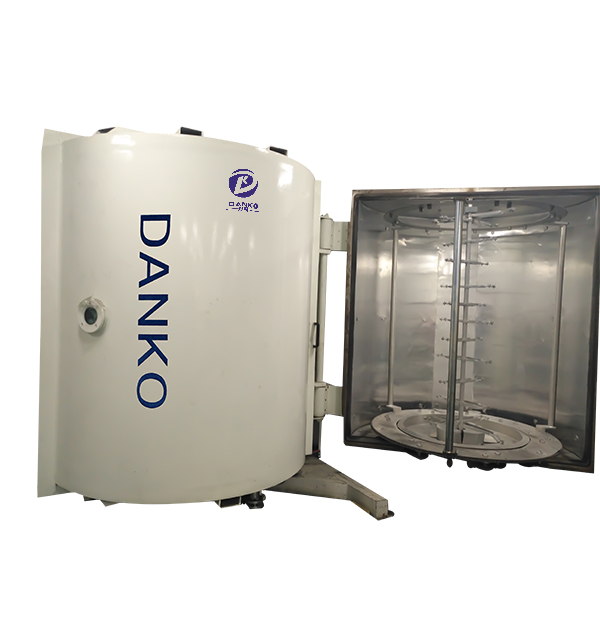
The chamber itself takes less space than the infrastructure around it. A mid-sized DLC system occupies perhaps 15 to 30 square metres including the pumping package, power supplies and chiller, but the practical footprint also includes a load and unload area, a fixture storage wall and cleaning stations. Those cleaning stations are usually the real bottleneck, not the coater.
Base pressure, working pressure and gas purity are process variables, not maintenance trivia. A chamber that reaches 5 x 10⁻⁴ Pa slowly will still coat parts, but residual water vapour changes the hydrogen content of the film and the batch drifts away from your qualified recipe.
Part preparation is the most common cause of complaints about DLC. Fingerprints, cutting fluid residue and oxide layers survive a plasma etch more often than anyone expects. If your process has no controlled cleaning line ahead of the coater, budget for one. It costs a fraction of the machine and prevents most of the adhesion failures that get blamed on the machine.
DLC is a thin film, not a repair method. If a die has already lost 50 micrometres of material to wear, coating it will not restore the dimension, and coating a reground surface with the wrong finish will produce adhesion failures within days.
Matching the Machine to the Parts You Run
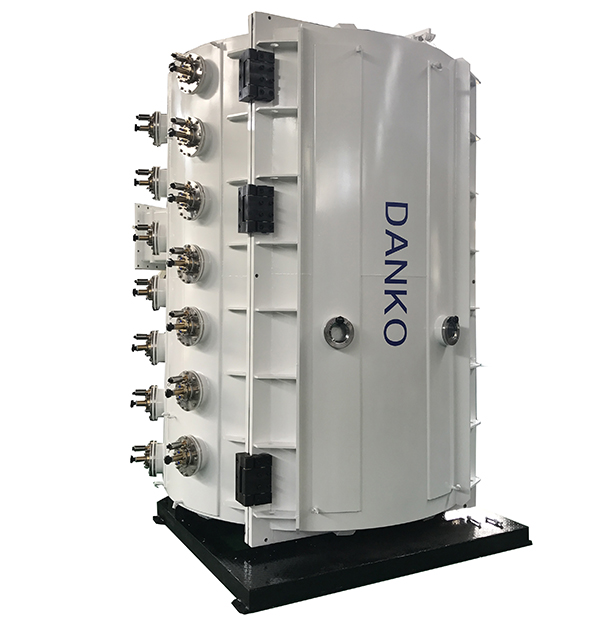
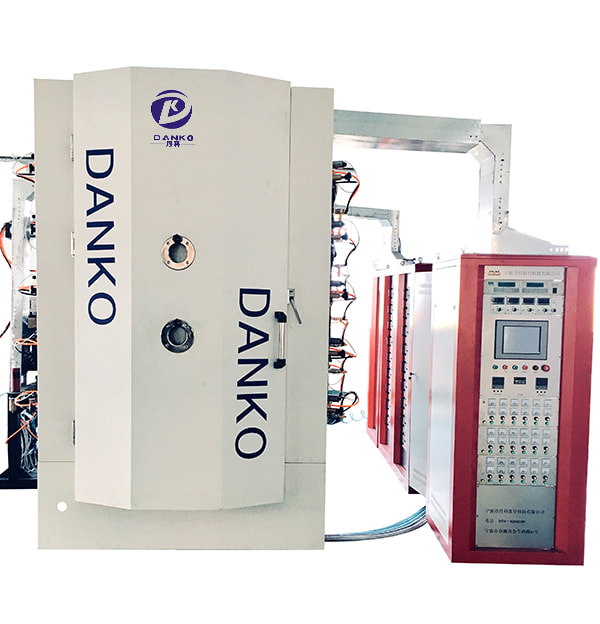
The substrate decides more about the configuration than the coating does. Three broad groups cover most buyers, and a manufacturer such as a PVD and DLC vacuum coating equipment builder will normally ask which of them represents your production volume before quoting a chamber.
Cutting tools and forming dies
End mills, drills, taps, punches and forming dies all benefit from a hard, low-friction carbon layer, but they demand high adhesion and, on carbide, a careful interlayer to limit cobalt diffusion. Cathodic arc machines dominate this segment because ta-C hardness survives the interrupted cutting loads that break softer films. Edge radius preparation matters as much as the coating: a sharp, unpolished edge concentrates stress and fails early.
Medical and surgical instrumentation
Surgical blades, rasps and endoscopic components need a film that stays hard, lubricious and chemically stable through repeated sterilisation. Low-temperature PECVD routes are usually the fit, because many instrument alloys cannot tolerate the surface temperatures an arc process creates.
Automotive and mechanical transmission
Fuel injector components, tappets, piston rings, gears and bearings use doped DLC to cut friction without changing base metal hardness. These parts are usually high volume and consistent in geometry, so load capacity and cycle time carry more weight than process flexibility.
Questions to Settle Before You Sign
Ask these in writing and keep the answers attached to the purchase order. The replies will tell you more about a supplier than any factory tour.
Which substrates, in what surface condition, will represent 80 percent of your batches?
What is the maximum substrate temperature your parts tolerate, and how does the machine behave at that limit?
How is film thickness measured, on what sample, and at what frequency during production?
What adhesion standard applies: Rockwell HF class, scratch test load, or both?
What is the guaranteed cycle time at the stated load, and who designs and owns the fixtures?
What happens during a cathode or target change, and how long is production stopped?
Which parts are consumable, what do they cost per batch, and what is the lead time from your region?
What does acceptance look like if the first coating trial misses the agreed numbers?
The most expensive clause in a coating equipment contract is a vague acceptance criterion. Define the sample part, the test method and the pass threshold before the deposit is paid, not after the chamber is installed.
Commissioning and the First Three Months
A DLC coating machine rarely reaches rated output in week one. The first month normally goes to establishing cleaning parameters, confirming the etch step and finding the bias voltage that gives acceptable adhesion on each of your main part geometries. Expect to coat samples that never leave the building, and expect the process engineer to spend more time on surface preparation than on deposition settings.
The most useful thing you can do before delivery is to send production parts rather than polished test coupons. A polished coupon will pass almost any adhesion test. A worn punch with its original heat treatment and a real edge radius tells you what the machine can actually do on the parts that pay for it.
A realistic ramp: 30 percent of rated output in month one, 60 percent in month two, and full production by month three, with a documented thickness and adhesion check recorded at every stage.
Choosing a DLC coating machine comes down to three questions: what film your parts need, what temperature they can survive, and what repeatability your customers will accept. Answer those and the configuration follows almost automatically. Skip them and the chamber becomes a very expensive way to produce rejects with a glossy finish. The manufacturers who get this right do not buy the largest system in the catalogue. They buy the one whose process window matches the parts they already know how to make well.
Zdieľanie:
Konzultácia
Vaša e -mailová adresa nebude zverejnená. Požadované polia sú označené *

 E -mail:
 Tel:+86-13486478562

 Jazyk

 Tel: +86-13486478562
 FAX: +86-574-62496601
 E -mail: [email protected]
 Address: 79 West Jinniu Road, Yuyao, Ningbo City, Zhejiang Provice, Čína